I just spent six weeks in Kolkata, India, helping set up our very first project with Associated Initiative for Mankind Foundation - and honestly, I loved every minute of figuring things out as we went.
In this short series, I want to share what setting up a project from scratch looks like, what daily life in India has been like for me, and what it means to be part of a growing start-up. This first post focuses on the process of getting the project off the ground.
I had already been in Kolkata since early January. From the beginning, the city felt quite different from the other parts of India that I’d been to. Even though it is India’s third-largest city, it somehow didn’t feel as overwhelming as others. The people in Kolkata were also extremely welcoming and curious about where I came from and what I was doing there. I also noticed that I didn’t find all my favorite North Indian curries straight away – and had to figure out the names of new dishes, as I'd mainly been to the Hindi-speaking parts of India, and everything in Kolkata was in Bengali. So I’d had plenty of time to explore already, mostly by taking the city’s colorful buses.
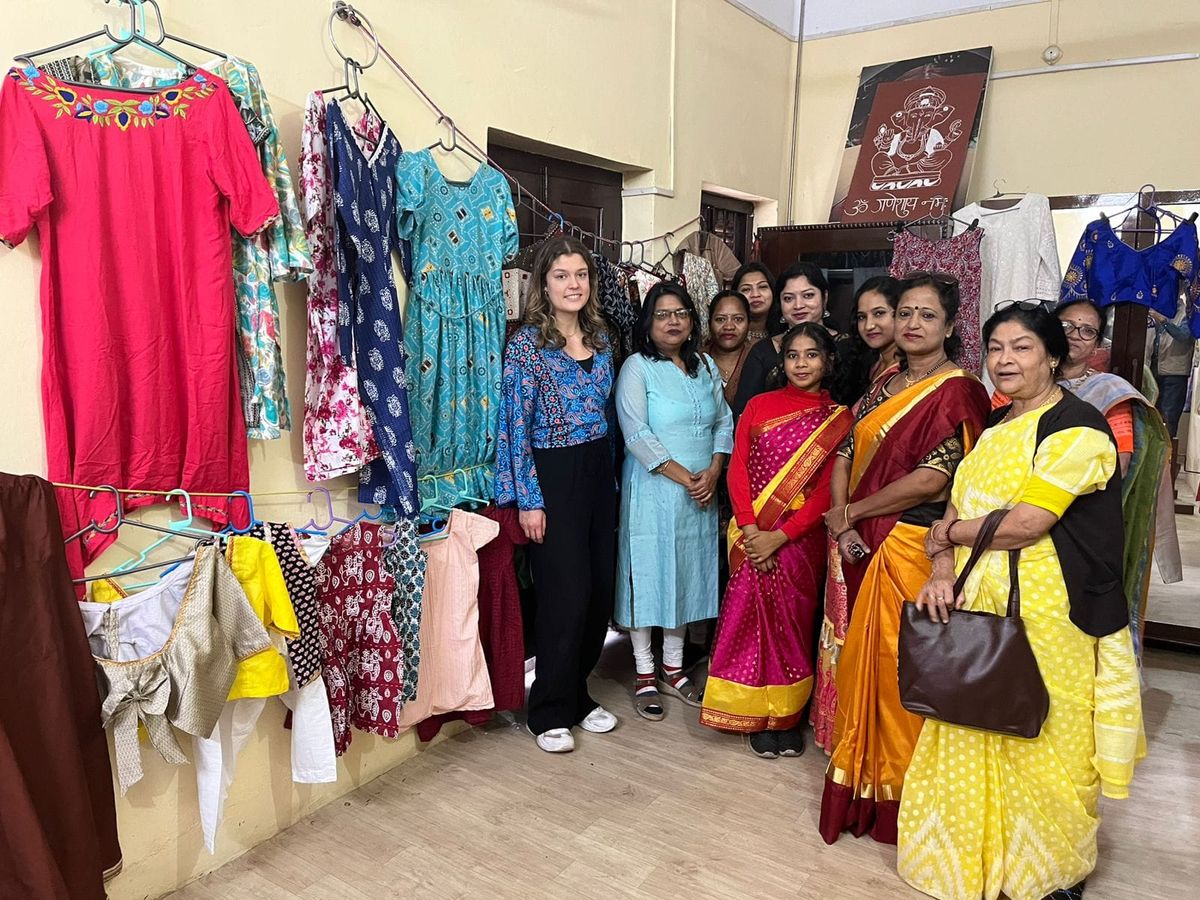
As Dharma’s Program & Partnership Coordinator, I started by reaching out to AIM to see if they’d be interested in working together. They got back to me super quickly and invited me to meet, as I was already in Kolkata. They invited me to a Puja, which I had never been to. It is a Hindu worship ritual, and it was honestly the best way to start our partnership. I learned about the goddess Saraswati and AIM’s center in Kasba, where they run after-school and tailoring programs, met the team, and (of course) had amazing Bengali food.
After a follow-up meeting with Dharma’s founder, we decided to support AIM’s tailoring program in Boral. Through the SuiDhaga initiative, Dharma will fund fabric and accessories, so women can receive tailoring training and build sustainable livelihoods.
Once the project details were finalized, the real setup work began. AIM had already ordered the sewing machines. The center is taken care of by Ruby, a local woman, on a day-to-day basis, and she also arranged for it to be cleaned before starting the project. We then bought tables, chairs, whiteboards, and other teaching materials like registers.
As AIM held an eye clinic on the Sunday of that week, where the community received free eye tests and spectacles if needed, the sewing machines were delivered the following week. We also held a first informative meeting with the women who will be participating in the project, to explain more about it and answer any questions they may have.
Now we’re ready to officially kick things off. I’m excited to share more about the SuiDhaga initiative — and more stories from my time in India — very soon. I also want to thank AIM’s team, and especially Banasri Bhattacharyya, for being more than welcoming, showing me the best parts of Indian culture and the local spots in Kolkata, and introducing me to Bengali cuisine.